The Recycled aggregates for 3D printed concrete structures (Recycl3D) project aims at maximizing the recycling of Construction & Demolition Waste (CDW) and their usage as Fine Recycled Aggregate (fRA).
About ERA-MIN 3
ERA-MIN3 scope of the joint transnational calls is needs-driven research on non-fuel, non-food raw materials (metallic, construction and industrial minerals) that clearly demonstrate potential to promote the sustainable and responsible supply, exploration, extraction, processing technologies, production, consumption and recycling of primary and secondary minerals and metals, as well as substitution of critical raw materials, in a circular economy.
There is a focus on resource efficient production and recycling that has low environmental impact and is economically feasible in the short-term. A crucial challenge is to consider societal impact and public perception, health and safety issues related to the different stages of the whole raw materials value chain. New business models and digital technologies will be crucial for transferring research results to the market.

Recycl3D Scope
Philosophy We Strive For
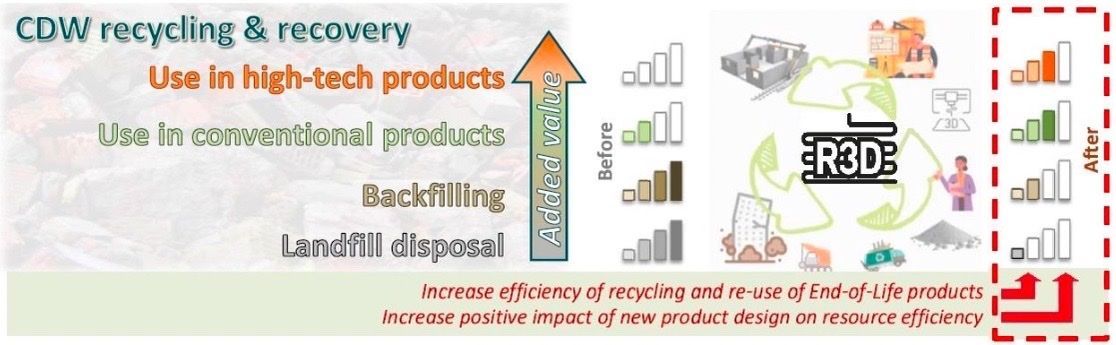
- Construction & Demolition Waste (CDW) represents one of the most relevant material flows globally. Nonetheless, the market uptake of recycling and recovery products obtained from CDW is still lacking. Within CDW recycling products, the fine faction of recycled aggregate is still the most under-used component without a clear entry point into the circular economy model.
- The recovery/recycling of CDW can be improved by developing its use in higher-grade applications through innovation and emerging technologies. The actions within Recycl3D will facilitate the entry of fRA from CDW into the circular economy value-chain and at the same time increase the material efficiency and lead to higher added value.
- These outcomes will directly impact both the scientific and industrial communities at both the global/European level and the national/regional one. Recycl3D consists of Applied/Industrial Research activities in the fields of sustainable construction materials & structures and additive manufacturing performed by a carefully tailored Consortium that ensures a multidisciplinary and complementary expertise needed to significantly advance current knowledge.
Skills We Use
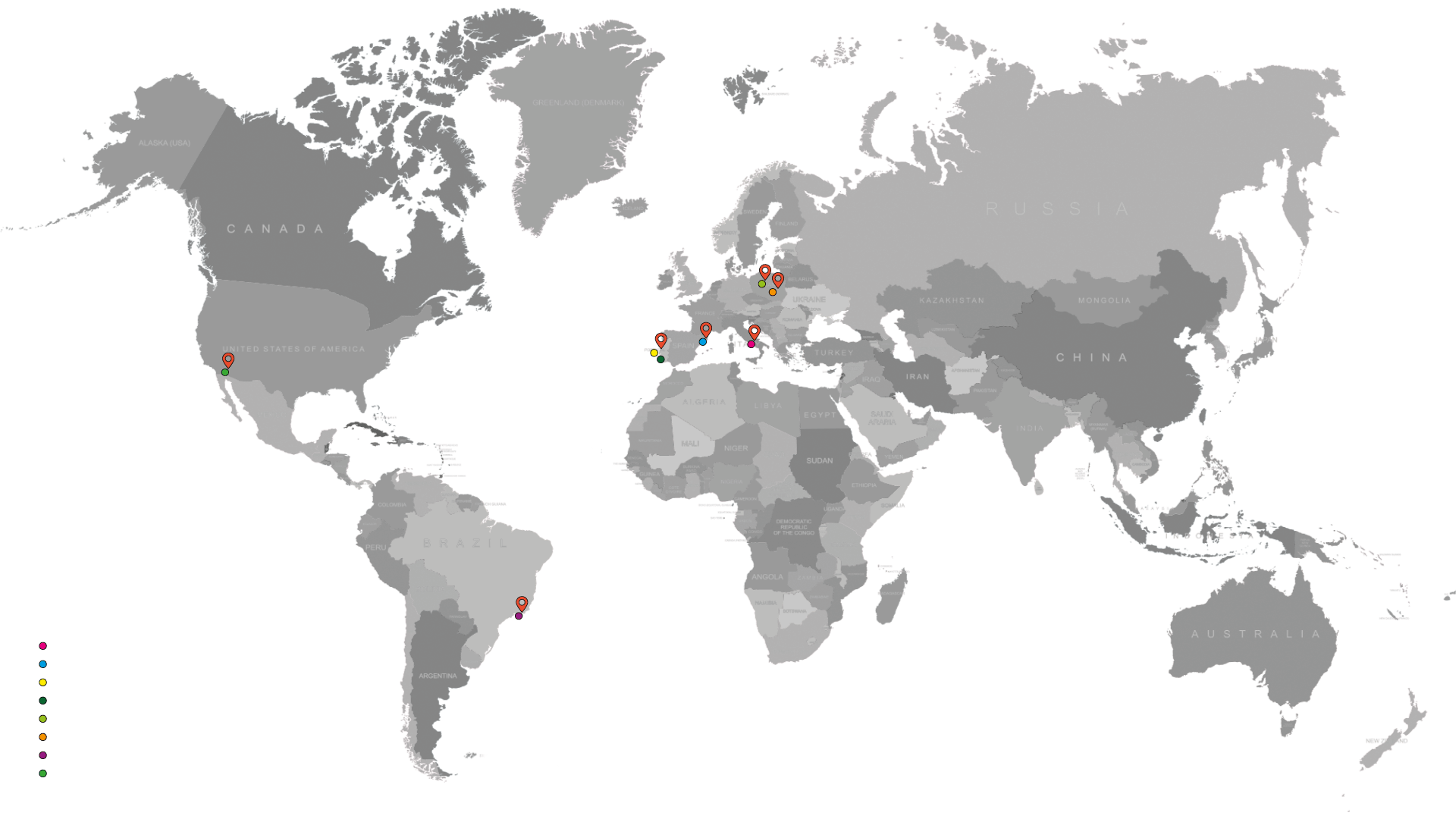
Consortium
Funding Agencies
University of Salerno (UniSa)

Universitat Politècnica de Catalunya (UPC)



c5Lab_Sustainable Construction Materials Association (c5Lab)
National Laboratory for Civil Engineering (LNEC)
West Pomeranian University of Tecnology in Szczecin (WPUTS)
BETOTEST POLSKA Sp. z o.o. (BetoTest)
Federal University of Rio de Janeiro (UFRJ)

Arizona State University (ASU)